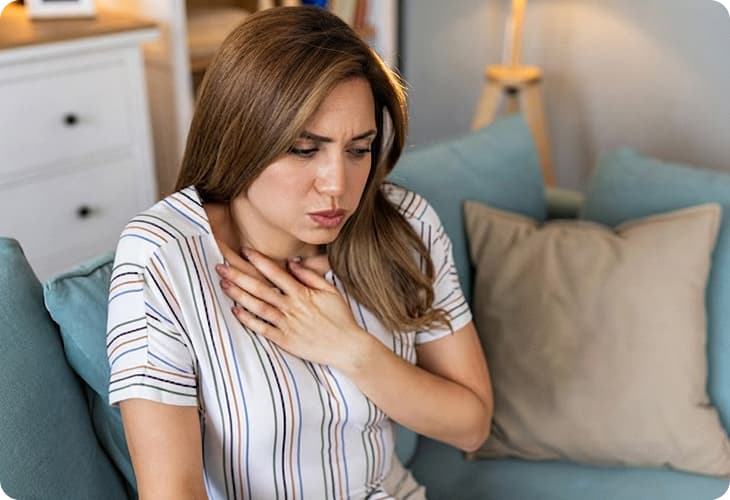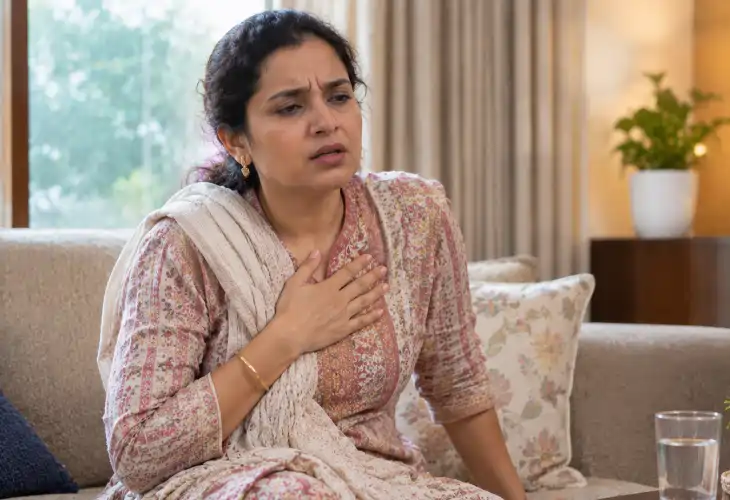
A sudden flutter, thump or pounding in the chest can be unsettling. The usual heart palpitations causes are harmless, but occasionally they signal a heart rhythm problem, so knowing what they feel like helps you act quickly if needed.
What Are Heart Palpitations?
Palpitations are an awareness of your own heartbeat. It may feel fast, irregular, pounding or as though it skipped a beat. They can be felt in the chest, throat or neck, and last from seconds to minutes.
Common Heart Palpitations Causes
The usual heart palpitations causes are not heart disease at all.
- Anxiety, stress and panic
- Caffeine, alcohol and nicotine
- Lack of sleep and dehydration
- Fever or infection
- Hormonal changes, including pregnancy and menopause
- Anaemia or an overactive thyroid
- Some medicines and stimulants
Racing Heartbeat at Rest
A racing heartbeat at rest can look worrying, especially at night. A resting adult heart rate is normally 60 to 100 beats per minute. A rate persistently above that, or sudden bursts of rapid beating, may relate to anxiety, thyroid problems, or arrhythmias such as supraventricular tachycardia or atrial fibrillation.
When Are Palpitations Serious?
Understanding when are palpitations serious guides urgency. Seek emergency help, by calling 999, if palpitations come with chest pain, severe breathlessness, fainting or near-fainting. Book a prompt review if they are frequent, last longer than a few minutes, or you have heart disease or a family history of sudden cardiac death.
Tests Used to Investigate Palpitations
- Physical examination and blood pressure check
- Blood tests for thyroid function, anaemia and electrolytes
- A resting electrocardiogram (ECG)
- Longer rhythm monitoring if episodes are intermittent
- An echocardiogram to assess heart structure
Managing Palpitations Day to Day
Cutting back on caffeine and alcohol, managing stress, staying hydrated and sleeping well often reduce episodes. Keeping a diary of when they happen, and what you were doing, helps a clinician identify triggers.
Everyday Triggers Worth Tracking
Many people notice a pattern once they pay attention. Palpitations may follow a coffee, a late meal, a stressful meeting or a poor night of sleep. Energy drinks, decongestant tablets and some herbal products are common culprits.
Keeping a short diary of the time, duration, activity and how it felt gives a clinician useful clues, and can save repeated tests.
Arrhythmias and Their Treatment
When an abnormal rhythm is confirmed, treatment depends on the type. Some arrhythmias need only lifestyle changes. Others are managed with medication, simple manoeuvres taught by a doctor, or procedures such as catheter ablation.
Atrial fibrillation deserves particular attention because it raises stroke risk, and many people with it have no obvious symptoms. Treatment may include blood-thinning medicines.
Cardiac Assessment in Milton Keynes
Bloom Health lists cardiology among its specialties, so a private cardiologist Milton Keynes assessment is available without waiting for a GP referral. On-site diagnostics include echocardiogram and an ECG test Milton Keynes patients can arrange the same day, alongside doctor-directed blood tests for thyroid and cardiovascular markers.
Conclusion
Most palpitations are harmless, yet new or worrying symptoms deserve a proper check. A private cardiologist Milton Keynes appointment can assess the heart rhythm properly.
Bloom Health Hospital, 163-175 Grafton Gate, Milton Keynes, offers walk-in urgent care from 8am to 10pm every day, with no appointment needed.

Quick note :
This article provides general health information and does not replace a clinical assessment. Call 999 for severe or life-threatening symptoms.
Quick note: This article provides general health information and does not replace a clinical assessment. Call 999 for severe or life-threatening symptoms.
About this Article