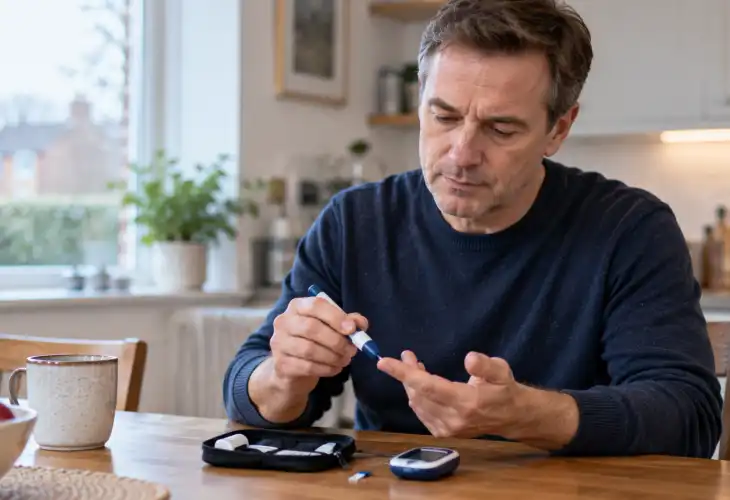
Diabetes is a long-term condition in which blood sugar (glucose) stays too high because the body makes too little insulin or cannot use it properly. Type 2 is the most common form in adults, and it can develop slowly, so blood sugar may stay high for years before anyone notices. Knowing the early signs of diabetes helps you ask for a test rather than guess. This blog explains the main types, what raises the risk, how testing works and how treatment is planned. It is written for patients, carers and local residents in Milton Keynes and does not replace a clinical assessment.
What Is Diabetes?
Diabetes is a long-term condition in which blood sugar (glucose) rises too high. The hormone insulin moves glucose from the blood into cells, and in diabetes the body either makes too little insulin or cannot use it well.
Type 1 diabetes is an autoimmune condition that usually starts suddenly and needs insulin. Type 2, the most common type in adults, develops gradually as the body becomes less responsive to insulin. Prediabetes means blood sugar is higher than normal but below the diabetes range.
Causes and Risk Factors
The cause of type 1 diabetes is not fully understood. Type 2 diabetes develops through a mix of genes and lifestyle.
A risk factor is not a cause, but it raises the likelihood. For type 2, these include carrying extra weight around the waist, a close relative with diabetes, low physical activity and high blood pressure. Age matters, and risk rises earlier in people of South Asian, Black African and Black Caribbean heritage. A history of gestational diabetes or polycystic ovary syndrome also increases risk. Being overweight does not mean someone will develop diabetes, and people at a healthy weight can also be affected.
Symptoms and Warning Signs
Common type 2 diabetes symptoms adults notice can be mild or absent. Look out for:
- Increased thirst and a dry mouth.
- Passing urine more often, especially at night.
- Tiredness that is hard to explain.
- Blurred vision.
- Itching around the genitals, or repeated thrush.
- Cuts and sores that heal slowly.
- Frequent infections.
- Tingling or numbness in the hands or feet.
- Unplanned weight loss, which is more typical of type 1.
Get urgent medical help if you have vomiting, stomach pain, fast breathing, breath that smells fruity, or drowsiness and confusion, particularly if you have known or suspected diabetes. These can signal diabetic ketoacidosis, a medical emergency. Call 999 if symptoms are severe.
Diagnosis and Tests
Not everyone needs every test. Common investigations include:
- An HbA1c blood test, which reflects average blood sugar over roughly two to three months.
- A fasting or random glucose test.
- Ketone tests on blood or urine if type 1 diabetes is suspected.
- Antibody blood tests to help identify type 1 diabetes.
- Blood tests for kidney function and cholesterol.
- Repeat testing to confirm the result if you have no symptoms.
- After diagnosis, regular eye, foot and blood pressure checks.
A single diabetes blood test UK clinics offer gives a snapshot, which a clinician interprets alongside your symptoms and risk factors. Results are usually grouped as normal, prediabetes or diabetes ranges, and your clinician will explain which applies to you.
Treatment and Management
Treatment depends on the type of diabetes, your health and your preferences:
- Type 1 diabetes: insulin, regular glucose monitoring and carbohydrate awareness, with specialist support.
- Type 2 diabetes: changes to diet and activity, weight management where relevant, and medicines such as metformin. Some people later need other tablets, injections or insulin.
- Prediabetes: lifestyle support aimed at reducing the chance of progressing to type 2 diabetes.
- Regular reviews of blood pressure, cholesterol, kidneys, eyes and feet.
- Structured education to help you manage the condition day to day.
- Weight-loss surgery: may be considered for some people with type 2 diabetes and obesity after specialist assessment, with risks and recovery discussed.
- Treatment targets are individual, and medicines are reviewed regularly because needs change.
Self-Care and Symptom Management
Choose regular meals built around vegetables, wholegrains and lean protein, and cut back on sugary drinks. Aim for regular activity that suits you, and stop smoking if you smoke. Check your feet daily for cuts or sores. Home glucose tests can be useful, but a clinician should review the results. Take medicines as prescribed and do not stop them without advice.
When Should You See a Doctor?
Arrange a routine appointment if you notice several of the symptoms above, or if you have risk factors and have never been tested. Get same-day advice if you feel unwell with high thirst, frequent urination and weight loss. Call 999 for signs of ketoacidosis, such as vomiting, fast breathing and drowsiness. Tell your clinician if you are pregnant.
How to Choose the Right Specialist or Hospital in Milton Keynes
- Check registration with the Care Quality Commission (CQC).
- If you are looking for a diabetes specialist Milton Keynes offers, or a private endocrinologist Milton Keynes providers list, check their entry on the General Medical Council's specialist register.
- Ask whether blood tests are processed quickly and who explains the results.
- Ask whether a dietitian or diabetes nurse is part of the follow-up.
- Ask how eye screening and foot checks are arranged.
- Check fees and follow-up arrangements in advance.
Why Choose Bloom Health?
Bloom Health is a CQC-registered private hospital in Milton Keynes. Its walk-in GP service runs from 2pm to 10pm daily, with no appointment needed, and lists ongoing condition management among its services. The visit fee is £95, with tests billed separately.
Doctor-directed blood tests include diabetes and glucose screening, and thyroid, hormonal and metabolic panels, with same-day diagnostics listed. A doctor reviews results and explains the next steps. Bloom Health also lists referrals into specialist care. Endocrinology is not listed among its specialties.
Conclusion
Noticing the early signs of diabetes gives you the chance to arrange testing before symptoms become harder to ignore. A blood test is quick, and the result guides what happens next. If you have symptoms or risk factors, a clinician can assess you, explain the options and plan sensible follow-up. Bring a list of symptoms, medicines and any family history.
About this Article