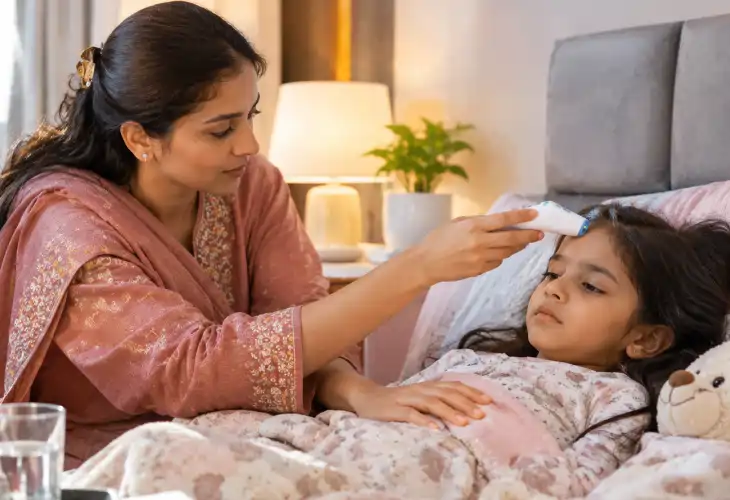
A hot, flushed child at bedtime worries any parent. A high temperature in children UK families see most often is the body fighting infection, not an illness in itself, so how your child looks and behaves matters more than the number on the thermometer.
What Counts as a Fever in a Child?
A fever is a body temperature of 38°C or above. Normal temperature sits around 36.4°C, with small variations through the day. Most childhood fevers come from viral infections such as colds, and they settle within a few days.
Common Reasons for a Raised Temperature
- Colds, flu and other viral infections
- Ear, throat and chest infections
- Urinary tract infections
- Tonsillitis
- Reactions after vaccinations
- Overheating from too many layers
Child Fever: What to Do at Home
Many parents ask child fever what to do first. Offer plenty of fluids, dress your child in light clothing, and keep the room comfortable. Paracetamol or ibuprofen can ease distress if your child seems uncomfortable, following the dose on the label. Cold baths and fanning are not recommended. Do not give aspirin to children under 16.
Understanding a High Temperature in Children in the UK
A high temperature in children UK parents measure at home can look alarming, yet the number alone is not the whole story. A child who is alert, drinking and playing between doses is usually reassuring. A drowsy, limp or unresponsive child needs assessment even if the thermometer reading is modest.
When to Seek Help for a Child Fever
Knowing when to seek help for child fever can be lifesaving.
- A baby under 3 months with a temperature of 38°C or higher
- A baby of 3 to 6 months with 39°C or higher
- Fever lasting longer than five days
- A rash that does not fade when a glass is pressed on it (call 999)
- Fast or laboured breathing, repeated vomiting, or signs of dehydration
- A stiff neck, seizure, or unusual drowsiness
How a Doctor Finds the Cause
A clinician examines the ears, throat, chest and skin, checks hydration, and may request a urine sample or blood tests if no clear source appears.
Taking a Temperature Accurately
A digital thermometer placed under the arm or in the ear gives a reliable reading for most children. Forehead strips are less accurate. Wait a few minutes after a bath or heavy blankets before measuring, as these can raise the reading temporarily.
Write down the temperature, the time and any medicine given. This record helps a doctor see the pattern if you need to call for advice.
Keeping a Child Comfortable and Hydrated
Offer small, frequent sips of water or milk, and breastfeed or bottle feed babies as often as they want. Ice lollies can help older children who refuse drinks. Watch for signs of dehydration, such as a dry mouth, sunken eyes, no tears, or fewer wet nappies.
Let your child rest, but there is no need to keep them in bed if they feel like playing. Their behaviour is the best guide to how unwell they are.
Same-Day Help in Milton Keynes
Bloom Health's urgent care and walk-in GP services see children and adults of all ages. A children's walk-in clinic Milton Keynes parents can use means no waiting for a routine slot, and the private GP Milton Keynes service runs from 2pm to 10pm each day.
Conclusion
Most fevers pass without treatment, and your child's behaviour tells you more than the thermometer. If something feels wrong, a children's walk-in clinic Milton Keynes families can use offers same-day advice.
Bloom Health Hospital, 163-175 Grafton Gate, Milton Keynes, offers walk-in urgent care from 8am to 10pm every day, with no appointment needed.

Quick note :
This article provides general health information and does not replace a clinical assessment. Call 999 for severe or life-threatening symptoms.
Quick note: This article provides general health information and does not replace a clinical assessment. Call 999 for severe or life-threatening symptoms.
About this Article